


Quick answer: most restaurants in India need an FSSAI food licence, GST registration, a shop and establishment registration, a trade or health licence from the city, fire safety clearance where the size or building requires it and signage permission. Bars also need an excise licence, and playing recorded music needs a music licence. Exact rules and timelines vary by state and city.
Licensing is the part of opening a restaurant that most often delays launch day. Several approvals depend on your final layout, so the earlier you plan them alongside the design, the fewer surprises you face. SprintCo does not apply for licences on your behalf, but we prepare the layout and drawings many of these applications need and design the space to meet the requirements from the start.
1. FSSAI Food Licence or Registration
Every food business in India must be registered or licensed with the Food Safety and Standards Authority of India (FSSAI). The type depends on annual turnover:
- Basic registration for small businesses with turnover up to ₹12 lakh a year.
- State licence for turnover between ₹12 lakh and ₹20 crore.
- Central licence for larger businesses and some specific categories.
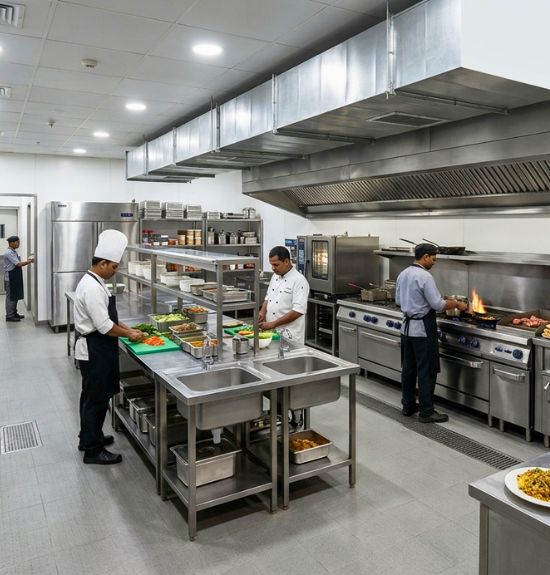
Your FSSAI number must be displayed at the outlet and on menus and packaging where applicable. Inspectors look at hygiene, so kitchen design matters: washable surfaces, handwash stations, separate prep areas and pest-proofing. See our commercial kitchen layout guide.
2. GST Registration
Restaurants must register for GST once turnover crosses the threshold, which is ₹20 lakh for most states (lower in some special-category states). Many owners register from the start, because delivery platforms and corporate clients often ask for a GSTIN. Your GST rate depends on the type of restaurant, so confirm it with your accountant.
3. Shop and Establishment Registration
Each state has its own Shops and Establishments Act covering working hours, holidays and employee conditions. Registration is usually done with the state labour department or the local body, and in many states it is needed soon after you start operating. It is also often required to open a business bank account.
4. Trade Licence or Health Licence
Your city’s municipal corporation issues a trade licence (in some cities called a health trade licence) that permits a food business at your address. The authority may check that the premises suit an eating establishment, so confirm the property’s permitted use before you sign the lease.
5. Fire Safety Clearance (Fire NOC)
The state fire department issues a No Objection Certificate for premises above certain limits of floor area, seating capacity or building height, which vary by state. Even when an NOC is not required, malls and landlords will insist on fire safety measures. The design has to plan exits, emergency lighting, extinguishers, detection and, in kitchens with heavy cooking, suppression over the cooking line. Building this in at design stage is far cheaper than retrofitting it.
6. Eating House Licence (Some Cities)
In some cities, including Delhi and Mumbai, restaurants also need an eating house licence issued through the police licensing authority. Check whether your city requires one.
7. Liquor Licence (Bars and Restaurants Serving Alcohol)
Serving alcohol requires a licence from the state excise department. It is usually the longest and most expensive approval, the categories differ from state to state, and some states, such as Gujarat, have prohibition. The bar layout, storage and seating can be part of the application, so agree the licence route before the bar is designed. See our bar and pub design service.
8. Signage Licence
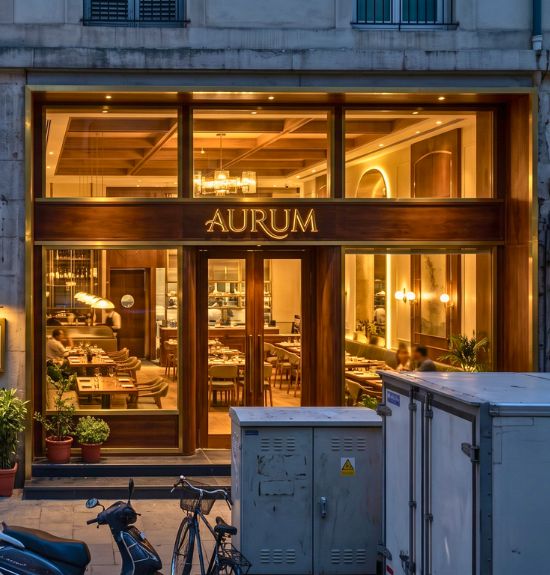
Outdoor signs, illuminated fascias and hoardings usually need permission from the municipal corporation, and malls have their own signage rules. Plan signage sizes and positions with the design so the approved sign matches what is built.
9. Music Licence
Playing recorded music in a commercial space requires a licence from the relevant music rights bodies. If you plan live performances, check the event and noise rules in your city too. Acoustic design helps you stay within noise limits.
10. Other Approvals to Check
- Pollution control consent from the State Pollution Control Board, needed for some restaurants depending on size and state, especially those with large kitchens or generators.
- Lift licence if the premises use a lift.
- Legal metrology registration if you weigh and sell products, for example in a bakery.
- Building documents: confirm the landlord has the occupancy certificate and that the building’s permitted use allows a restaurant.
- Trademark registration for your brand name and logo, which is optional but worth doing before you invest in signage and branding.
How Licences Affect Your Design and Timeline
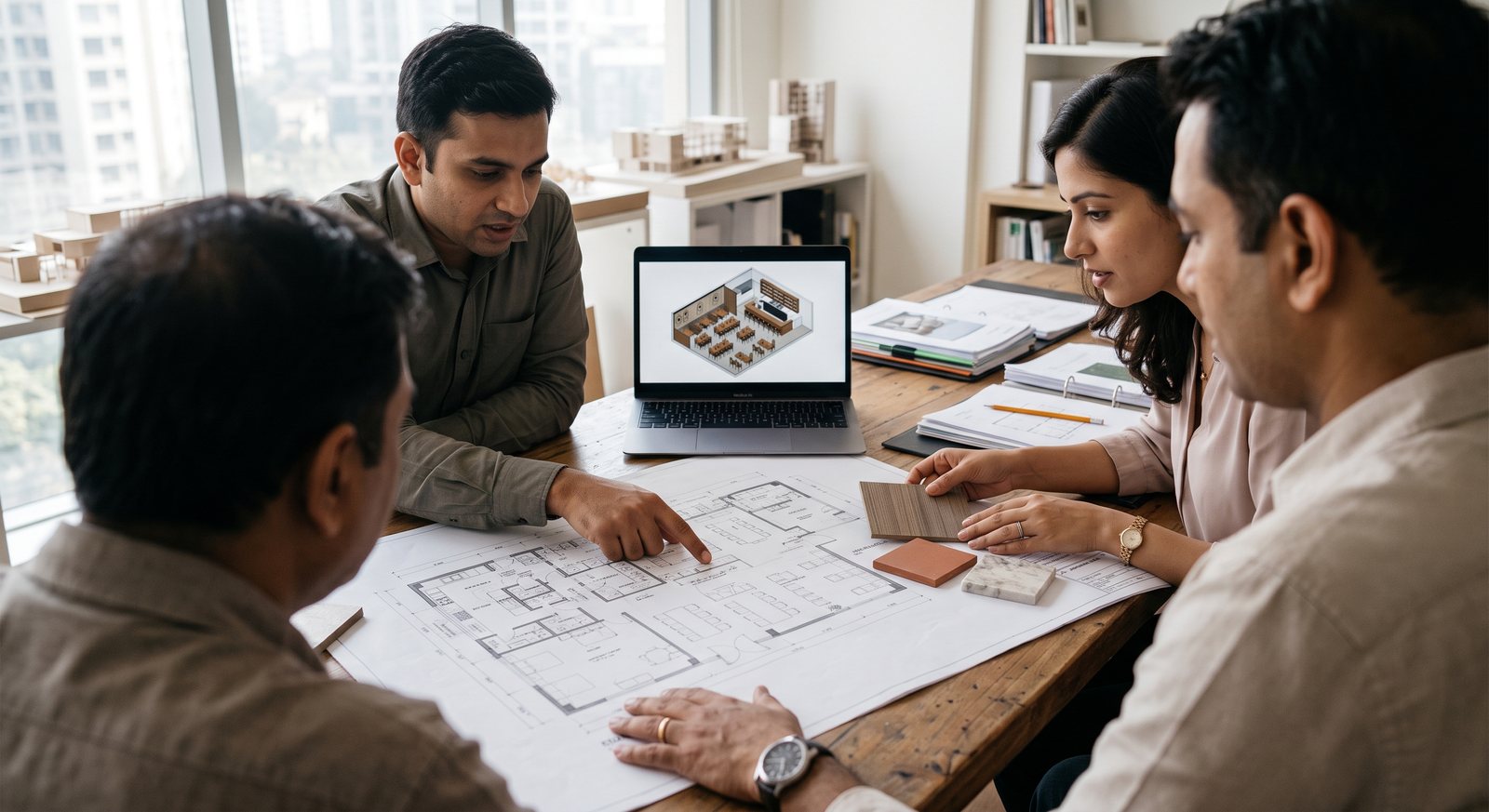
Several approvals depend on drawings: fire safety, the excise licence, the trade licence and the landlord’s fit-out approval. If the layout changes late, applications may need to be redone. Our advice is to:
- confirm the property’s permitted use and fire requirements before signing the lease;
- agree the kitchen, bar and seating layout early, because the licences are based on it;
- start the longest approvals, usually the excise licence and fire safety clearance, while design is still under way;
- keep a register of every licence, its renewal date and where the original is kept.
For the full opening sequence, see how to open a restaurant in India. To plan the budget, use our restaurant interior cost calculator and read the cost of opening a café.
Printable Restaurant Licence Checklist
Restaurant Licence Checklist (India)
Before you sign the lease
Registrations
City and state licences
Before opening
Rules vary by state and city; confirm requirements with the local authority or a licensing consultant. From the SprintCo guide: sprint-co.com/restaurant-licences-india-checklist
This guide is general information, not legal advice. Licensing rules, thresholds and fees change and differ by state and city, so confirm the current requirements with the relevant authority or a licensing consultant before you apply.